
Frozen Beauty (F2P Mystery)
Friendly Fox GamesAdventure
4.447.00 Reviews
- Version
- 1.5.5g
- Installs
- 50.00K
- Age Rating
- Everyone
Screenshots
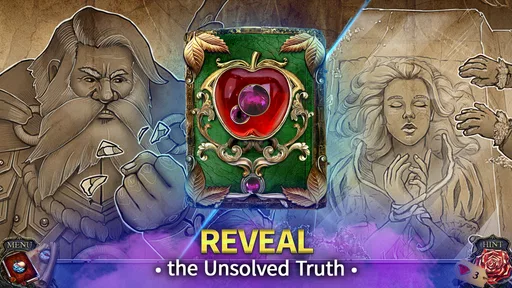
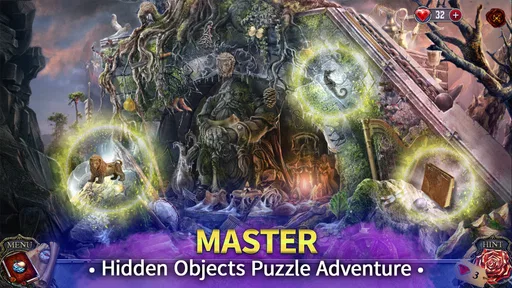
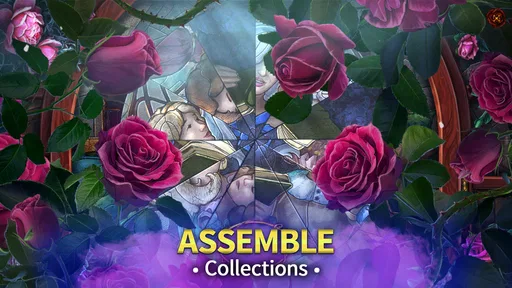
Our Review of Frozen Beauty (F2P Mystery)
 Analysis by Appyee
I spent time with Frozen Beauty (F2P Mystery) as a compact mystery adventure built around searching scenes, noticing small details, and working through puzzles. It comes from Friendly Fox Games, a developer I associate with story-led hidden-object experiences, and this release keeps that familiar foundation while placing it in a cold, visually dramatic setting. The store summary points to the core loop clearly, but the more useful question is whether that loop feels comfortable for a relaxed player, fair for someone who dislikes spending pressure, and satisfying enough to justify keeping it installed.
My overall impression is positive, with an important qualification: this is best approached as a leisurely observation game rather than a fast action adventure or a deep role-playing experience. I enjoyed the moments when a scene made me slow down and inspect it properly, especially when a puzzle connected an apparently decorative object with the next step. At the same time, players who want constant novelty, rapid movement, or a completely friction-free free-to-play experience may find the format less appealing.
How the frozen mystery plays in everyday use
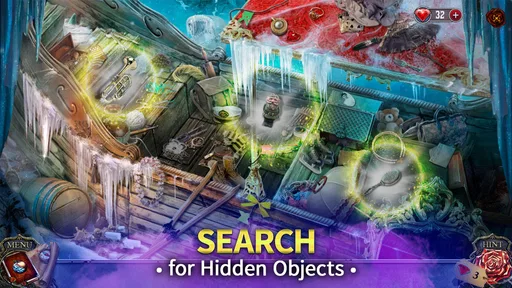
The adventure category is a natural fit because the game combines exploration, hidden-object searches, and puzzle solving instead of relying on one mechanic alone. I found that combination more pleasant in short sessions than in a long uninterrupted sitting. A typical use case is an evening when I have a little time to concentrate but do not want the reflex demands of an action game: I open a scene, search carefully, test an idea, and stop after reaching a natural point.
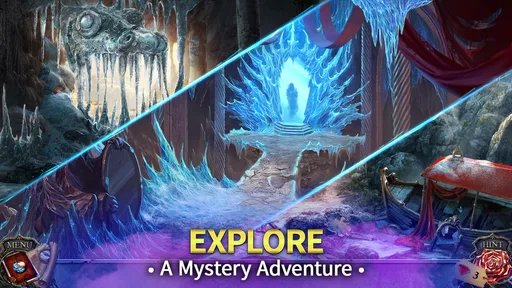
That slower rhythm is also where the setting matters. A frozen environment can easily become a decorative backdrop, but here it gives the investigation a particular mood. Snow, cold surroundings, and the promise of a mystery make the search feel more purposeful than simply tapping objects in a busy room. The atmosphere does not replace good puzzle design, yet it gives the individual scenes a reason to feel connected.
The strongest part of the experience is the basic search discipline it encourages. I learned not to tap randomly at the first object that looked unusual. Instead, I scanned the whole scene, grouped likely clues by shape or color, and then returned to details that seemed connected to the current task. That small change in approach made the puzzles feel more deliberate and reduced the frustration that comes from treating every hidden-object screen like a guessing contest.
One practical tip is to pause before using any available assistance. When I searched too quickly, I often missed an item that was visible but blended into the background. Taking a few seconds to check edges, repeated patterns, and objects that looked slightly out of place was more useful than immediately assuming the game had hidden something unfairly. This is a simple habit, but it makes the central loop feel more rewarding and can reduce the temptation to spend for help.
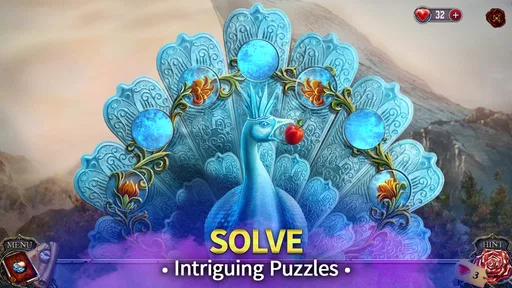
The puzzle layer gives the game a welcome change of pace. Searching asks me to observe; puzzles ask me to interpret. That distinction is important because a title made entirely of object lists can become repetitive. Here, the best moments came when I had to remember what I had seen and consider how two clues might relate, rather than merely locating another item. The experience remains accessible, but it is not completely passive.
Who will enjoy the pace, and who may not
I would recommend it to players who like mystery stories delivered through visual clues, especially those who enjoy taking their time with a scene. It also suits people who prefer games that can be played in small bursts without demanding a complicated control scheme. The Everyone content rating makes it approachable for a broad audience, although younger players may still need patience for the reading, observation, and puzzle logic involved.
I would be more cautious about recommending it to someone looking for combat, open-world freedom, or a large collection of character systems. The appeal is investigation through scenes, not movement through a fully interactive world. Players who become impatient when a solution is not immediately obvious may also prefer a more direct casual game. The mystery format rewards attention, and that can feel like a weakness if the player wants instant progress.
A realistic everyday scenario is a commute or waiting-room session with enough quiet to focus. I would not choose it while multitasking through messages or watching television, because the clues depend on visual attention. When I played while distracted, I missed details and then blamed the puzzle for being obscure. In reality, the game works best when it has my full attention for a few minutes at a time.
Progress without assuming the worst about free play
The game is free to start, which lowers the barrier for anyone curious about Friendly Fox Games’ style. It includes in-app purchases ranging from $0.99 to $14.99 per item. That is the important spending context: there is a free entry point, but optional purchases are part of the experience. I treat that as a reason to decide in advance how I want to play, rather than as an automatic reason to dismiss the game.
My preferred approach is to play the early sections without buying anything and use that time to judge two things: whether the investigation itself is enjoyable, and whether I am comfortable with the pace of progress. If I already feel that every obstacle is pushing me toward payment, the sensible choice is to stop before spending. If the searches and puzzles remain enjoyable on their own, optional purchases become a personal convenience rather than a requirement for discovering whether the game suits me.
This is also where patience has practical value. A hidden-object mystery can create pressure when I am stuck, particularly if I have been looking at the same scene for too long. I found it better to step away and return with fresh eyes than to turn a moment of uncertainty into an impulse purchase. That workflow is useful in any puzzle game, but it matters especially here because the main challenge is often perception rather than speed.
I would not describe free-to-play as automatically generous or automatically hostile based only on the presence of purchases. The fair question is whether the unpaid route remains enjoyable for the kind of player who accepts a slower rhythm. From my experience, the right mindset is to see spending as optional support or convenience, not as part of the basic promise of the mystery. Anyone who dislikes even the possibility of purchase prompts should establish device-level purchase safeguards before handing the game to a child.
Another useful habit is to avoid buying while frustrated. If I cannot find an item, I first rescan the scene at a different pace, reconsider the wording of the task, and check whether I have misunderstood the objective. This prevents a common free-to-play mistake: paying to escape a problem that might have been solved by changing the way I was looking. It also gives a clearer sense of whether a purchase would genuinely improve the experience or merely shorten a satisfying discovery.
Fairness, competition, and the right comparison
Frozen Beauty is not a competitive multiplayer title in the way a ranked battle game is, so fairness has a different meaning here. There are no opponents to outscore in my sessions and no competitive ladder shaping my decisions. The relevant issue is whether spending changes my personal progress enough to undermine the puzzle experience. For a single-player mystery, I care more about preserving the feeling of solving than about comparing results with other people.
That makes this a better fit for players who want a private, low-pressure adventure than for anyone seeking social competition. A purchase can potentially matter to a player’s pace, but it does not turn the game into a contest where another person’s wallet determines my standing. I still prefer to keep my own spending limited, because solving a clue feels less meaningful if I know I can bypass every uncomfortable pause.
Compared with a traditional premium adventure game, the free entry is attractive, but the trade-off is the presence of optional purchases and the possibility that progress may feel less straightforward. A premium title usually asks for payment before play and then offers a more predictable structure. Compared with a basic hidden-object app, this game has a stronger mystery identity and a more purposeful adventure frame, but it may ask for more patience than a simple list of objects followed by a quick reward.
Compared with action-oriented adventure games, the contrast is even clearer. There is no reason to choose this one if what I want is speed, combat, or constant mechanical variety. Its strength is the quiet tension of looking carefully and making connections. That is a genuine niche, not a deficiency, but it means the game should be judged against other story-driven puzzle adventures rather than against large-scale action releases.
For families, I would explain the purchase situation before letting a child play independently. The Everyone rating makes the content broadly accessible, but age suitability and spending readiness are separate questions. A child may understand the mystery while still being tempted by a convenient purchase. A supervised first session is a practical way to see whether the puzzles are comfortable and whether the free-to-play elements need household limits.
What I would check before committing to a long playthrough
The release date is February 18, 2026, and the current version is 1.5.5g. Those details matter because a relatively new release can evolve as the developer refines it. I would check the version shown on the device before starting a serious playthrough, particularly if a search result or an older installation presents different behavior. The minimum operating system is Android 6.0, so compatibility should be comfortable for many older Android devices, although actual smoothness can still vary by hardware.
The game has reached over 50 thousand installs, with an average rating of 4.4 from around 1.3 thousand ratings and 47 written reviews. I read those figures as signs of a real early audience rather than proof that every player will have the same experience. Ratings are useful for spotting broad satisfaction, but they cannot tell me whether a particular player enjoys slow searches, puzzle interruptions, or optional purchases. My own decision would still depend on whether that style matches my habits.
One unknown I would handle carefully is how the long-term balance feels for different kinds of players. Someone who plays occasionally may experience the free route differently from someone who wants to complete every available section quickly. Rather than assuming either extreme, I would begin with a short trial, note how often I feel blocked, and decide whether the pace is acceptable before spending. That is more reliable than treating the purchase range as either harmless or alarming without personal context.
I would also avoid assuming that every puzzle has one obvious presentation style. Hidden-object games often rely on visual language, and a clue may be easier for one player than another depending on screen size, lighting, and eyesight. Playing on a larger display or increasing attention to contrast can help, but I would not expect the game to become a good fit for someone who strongly dislikes visual searching. The core mechanic cannot be separated from the experience.
Another consideration is attention fatigue. When several scenes demand close inspection, my accuracy drops if I keep pushing after I stop noticing details. A short break is not merely a comfort tip; it can improve puzzle performance and preserve the atmosphere. I found that returning later made the mystery feel less like repetitive tapping and more like an investigation I was choosing to continue.
My trust verdict for a cautious player
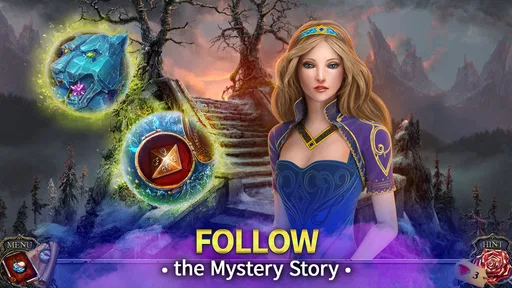
After playing it, I see Frozen Beauty as a worthwhile free starting point for fans of atmospheric hidden-object mysteries. Friendly Fox Games has chosen a clear identity: a visual investigation set against a frozen backdrop, with puzzles providing structure between searches. The game is most convincing when I slow down, inspect a scene properly, and let the mystery carry the session instead of rushing toward the next reward.
I would recommend trying it if you want a calm adventure that rewards observation and can fit into short, focused sessions. I would skip it if you need action, dislike free-to-play purchase options on principle, or want a premium experience with every progression decision settled upfront. Those are not minor preferences here; they directly affect whether the game’s pace feels relaxing or restrictive.
My spending verdict is cautious but fair: start free, set a personal limit, and never buy a hint or convenience item simply because frustration has taken over. The listed purchase range gives enough information to plan responsibly, while the rest should be judged through actual play rather than assumptions. If the unpaid mystery already feels enjoyable, that is a good sign. If it feels like waiting for permission to continue, the game is probably not the right choice for you.
In the end, I would keep this one in the “try before deciding” category. It has a focused mood, an accessible premise, and enough puzzle variety to make the investigation feel more substantial than a plain object-finding exercise. Its success depends on patience, attention, and comfort with optional spending. For the right player, the best reason to play is the satisfaction of noticing what others might miss, not the promise of speed or competition.
Verdict
Strengths of Frozen Beauty (F2P Mystery)
- Charming frozen-world visuals create a memorable atmosphere.
- Story-driven puzzles offer a relaxing alternative to fast-paced games.
- Playable offline, making it convenient for travel or limited connections.
- Simple controls are accessible for younger and casual players.
- Free-to-play access lets you try the core experience without payment.
Limitations of Frozen Beauty (F2P Mystery)
- Some puzzles may feel too easy for experienced mystery-game fans.
- Hints or progression boosts may be limited behind optional purchases.
- The mystery can become repetitive after extended play sessions.
- Small text or visual details may be difficult to read on phones.
- Performance may vary on older devices with limited memory.
Other Releases by Friendly Fox Games
View All
The Blue Chamber Mystery (F2P)
Adventure4.5
Similar Picks in This Category
View All
Roblox
Roblox Corporation4.2

Pokémon GO
Niantic, Inc.3.5

Ninja warrior: legend of adven
TOH Games4.6

Ninja Arashi
Black Panther4.6

Eyes - The Horror Game
Fearless Games sp. j.4.5

Critical Action:Gun Strike Ops
FPS Shooter & Action Game4.3
Frequently Asked Questions
What is Frozen Beauty (F2P Mystery) about?
Frozen Beauty (F2P Mystery) is a free-to-play mystery and adventure game built around a dramatic frozen-world storyline. Players investigate suspicious events, interact with characters, search locations for clues, and gradually uncover the truth behind the central mystery. The game combines narrative scenes, exploration, hidden-object-style tasks, and light puzzle solving, making it suitable for players who prefer story-driven gameplay over fast action.
Is Frozen Beauty really free to play?
Yes, Frozen Beauty can be downloaded and played without paying an upfront purchase price. However, free-to-play games commonly include optional in-app purchases, such as premium currency, extra hints, energy, special items, or faster progress. Depending on how you play, you may be able to complete the story without spending money, although waiting periods or limited resources can make optional purchases tempting.
Does the game require an internet connection?
An internet connection may be needed for the initial download, account-related features, advertisements, updates, and in-app purchases. Some parts of the game may remain accessible offline, but this can vary by device version and game build. For the most reliable experience, it is best to launch the game while connected to Wi-Fi and avoid assuming that every chapter or feature will work without internet access.
Are there advertisements or in-app purchases in Frozen Beauty?
Frozen Beauty follows the monetization style commonly used by free-to-play mobile mystery games. Players may encounter advertisements, particularly when requesting optional rewards, hints, or additional resources. In-app purchases may also be available for premium currency, boosters, energy, or other conveniences. Before downloading, parents and users should review the store listing and configure purchase restrictions if the device is shared with children.
What devices are compatible with Frozen Beauty?
Compatibility depends on the version available through the Google Play Store or Apple App Store, as well as your device’s operating system, storage space, and hardware performance. Before installing, check the current store requirements and make sure enough free storage is available for the game and future updates. Older phones and tablets may experience slower loading, reduced performance, or occasional crashes during more demanding scenes.
Play our best games!


